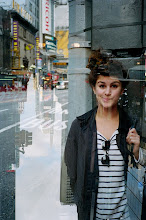
The company, which also publishes work printed in and out of house, was founded by Lynsey Atkin and Ben Freeman. Both were previously freelancers working in print design and discovered that there was no Risograph printing service available in Britain, so decided to be the first with Ditto Press.
Risograph printing is a rarely used commercially, not because it is disliked, but because it is, in Lynsey’s words, a “faff”.
“It's not an accurate science. You have to really persevere with it. It's a huge lot of trial and error. Anybody that wanted to make quick money out of printing, this is not the way to do it. You've got to want to do it and you've got to get satisfaction out of doing it.”
While many may believe printing to be an easy, automated process, Ben and Lynsey certainly prove otherwise. Risograph printing, though using digital images sent to the machine, is a finely tuned skill.
“It's a technique”, says Ben, “like screen-printing and lithography and etching, engraving, foil blocking. Our favourite clients are people who think about it as a technique that they like, rather than something just economical or something cool.”

The pair joke that the venture is the ‘artisan dream’, but it certainly appears to be a skilled trade rather than a factory production line.
“Some people's attitude to print is that you just send a printer an e-mail and they bang it out and give it to you, which is unfortunate because that's not how it used to be” explains Ben. “50 or 100 years ago nobody thought of printing in that way, but because we now have ink jet printers and laser printers people think you just press a button and it prints. That's never true at all, with any print process.”
One of the main benefits of Riso-printing is that it is possible to produce short runs of books. While with most other types of printing, such as offset lithography which is responsible for the printing of most books, it is easy and only financially feasible to take on a job that will produce hundreds of thousands of copies, Risography lends itself to jobs producing, say, 50 copies and is economically accessible. The cost is similar to that of digital printing, but the end product looks as nice as screen-printing.
On the whole, the only reason Ditto Press would turn away a print client would be if their job were too big. “If someone was to come to us and say we want 500 page books, full of colour photos, we could do it theoretically but it would take maybe a year and it would cost them about the same as a flat in Kensington, so we tend to be honest with people and say this isn't the right process. You get that with any printers. It's just about what's suitable,” says Ben.
A number of features of Risography reel in predominantly arty clients: the ability to produce a small number of copies at a low cost, the care that goes into the work, but also the way it looks.
“That's when we get the best results”, explains Ben, “when clients specifically want the look that we give. I think the reason why we get the customers we do is because we've got a background in design. So we know how things are supposed to look and what people want things to look like and we really care about what things are supposed to look like. The best thing for us is when we have that dialogue with people. We get that a lot, it's good.”

The relationship with a client is important to both Ben and Lynsey. The way the two parties work together resembles the way in which a tattoo artist and their customer work to achieve the perfect image.
“Not everyone is going to want the look we produce,” accepts Lynsey. “But it's great because we don't want to print for everybody, we care about our work and it's great to have clients that care about it as well, without trying to sound too much like a cliché.”
Aside from the print side of the business and the relationship with their clients, the element that really inspires the pair is publishing. A mutual desire to run a publishing company was one of the main driving forces behind the venture.
“We are so swamped with print that we don't really get as much time as we would like to put into the publishing business, but that's what we get really excited about and what we want to do.”
There are roughly five publishing projects coming up over the next few months, for which the two seem in anticipation.
To some, printing may be no more than the flip of a switch or a click of a mouse, but at Ditto Press that is certainly not the case. The process sounds excruciatingly tricky to pin down, but here it has been met with a genuine passion, infectious to those that come across it.
Photos and words - Evie Jeffreys
http://nothingbadmag.com/ (Issue 2)